Home / Bathroom Remodeling and the Pipes You Can Only Reach Once
Bathroom Remodeling and the Pipes You Can Only Reach Once
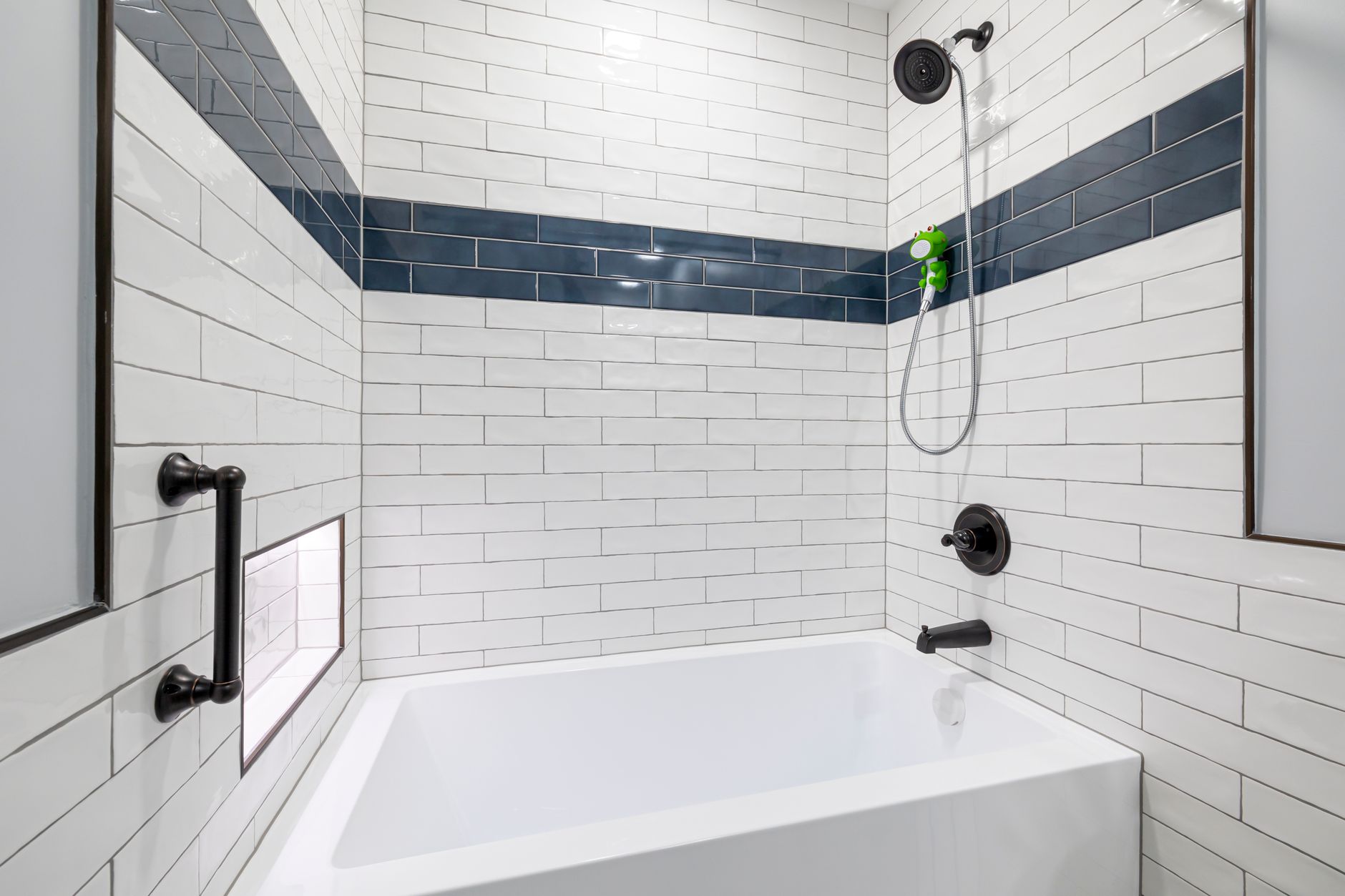
The part of a bathroom remodel nobody photographs is the part that decides whether the new one lasts. Tile gets the attention. Pipe gets the second invoice, usually after the tile is already up and the only way back in is through it.
Most of the single bath houses on the flat tracts of Lakewood went up inside a handful of years in the early 1950s, built in volume to a short list of plans, with one small hall bathroom, a concrete slab floor and a plumbing system that was ordinary good practice at the time and is not ordinary good practice now. Galvanized steel on the supply side. Cast iron on the waste side, often with a stub of clay running out past the footing to the street. Both materials were designed to give decades of service, and they did. The decades are up.
That matters at exactly one moment, which is the moment the bathroom is open. The wall is down, the floor is out, the fixtures are on the driveway, and the pipe is reachable without breaking anything you have paid for. Work done then is mostly labour already in the quote. The same work done two years later is demolition of a finished room. Homeowners who want to compare how different crews describe the areas they actually cover can visit bathroomremodelinglakewoodpro.com and read the service area pages before making calls, but the question that decides the budget comes earlier than any of that: what is behind the wall, and is it coming out while the wall is down.
Finding out what you have before anything is demolished
You can learn most of it in an afternoon with no tools worth owning.
Put a magnet on the exposed pipe at the water heater and under the kitchen sink. Galvanized steel holds the magnet. Copper and brass do not. Galvanized also looks the part once you know it: dull grey, threaded fittings rather than soldered ones, usually a rust bloom at the threads, because the threads are where the protective coating was cut away when the pipe was made up.
Next, separate pressure from volume, because almost everyone reports the wrong one. A gauge screwed onto a hose bib reads static pressure, which is the pressure with nothing moving. Scaled supply pipe often reads perfectly normal there and still delivers a weak shower, because the restriction only shows itself when water has to travel. A better home test is to run the shower, flush the toilet and open the basin tap, then listen and watch. If the shower collapses to a dribble, the problem is bore, not pressure.
Two more tells. Water that runs faintly rust tinted for the first few seconds after the house has sat all day points at steel breaking down inside. A tub that drains well for a few months after every snaking and then slows again points at a waste line that has lost its shape rather than one with a clog in it. The second one is worth a camera scope before any demolition date is set, because the answer changes the scope of the job.
Galvanized supply, and the reason low pressure is the wrong complaint
Galvanized pipe is steel with a zinc coating. The zinc gives itself up first, protecting the steel, and once it is gone the steel oxidises inward. The rust does not fall away. It builds, layer on layer, as hard scale. A three quarter inch line still measures three quarters on the outside while the opening inside it has narrowed to something closer to a pencil. Nothing visible changes. The house simply gets weaker at the fixtures, slowly enough that a family adjusts to it.
There is a second failure that is faster and less obvious. At some point in the last few decades, somebody almost certainly repaired a leak with copper and screwed it straight to the steel. Two dissimilar metals in contact with water on both sides make a small battery, and the steel side corrodes hard right at that joint. A dielectric union belongs there. If you find a bare copper to steel connection anywhere in the house, that spot is further along than the rest of the system.
Branch, or whole house
The honest way to decide is to look inside the pipe. On demolition day a plumber can cut a short section out of the supply run feeding the bathroom and hand it to you. The bore tells you whether the problem is local to this branch or general to the house, and that is the cheapest diagnostic in the trade.
Repiping only the bathroom branch is legitimate when the trunk from the meter is still open. It is money thrown away when the trunk is the thing that is scaled, because new pipe fed through an old bottleneck behaves exactly like old pipe. Scope follows the restriction, not the remodel.
On a slab house with no crawl space, a whole house repipe normally runs overhead through the attic and drops inside the walls to each fixture. That means ceiling and wall patches in a hallway, a closet and a couple of corners, not a trench through the living room floor. The mild coastal weather here helps: there is no hard freeze risk in an attic a few miles from the Long Beach line, though the new lines still get insulated for heat loss and to keep cold pipe from sweating on summer afternoons. Copper or PEX both work overhead. PEX is faster to run, has fewer joints and tolerates movement; copper is stiffer, takes heat near the water heater and reads better to some buyers. Either beats scaled steel by a wide margin.
Cast iron waste, and the three places it actually gives out
Cast iron does not usually fail all at once along its length. It fails in predictable spots.
The first is the bottom of long horizontal runs. Waste flows along the floor of the pipe, and over fifty or sixty years that floor channels, thins and eventually disappears while the top half still looks sound from the outside. A scope shows it immediately as a flat, rough bottom, sometimes with soil visible through it.
The second is the closet bend and the toilet flange. The old joint was packed with oakum and poured with lead, and the flange sitting in it rusts and crumbles from the top down. A toilet that rocks slightly is the warning. Once the flange has lost its ears, the wax seal stops sealing and a small volume of water goes into the slab at every flush, for years, with nothing visible on the surface except a dark ring that only appears once the flooring comes up.
The third is the short two inch arm and trap serving the tub. It takes soap, hair and hot water, all of which are hard on iron, and because it is buried under slab and under the tub nobody has ever looked at it. If demolition exposes damp concrete, a musty smell with no traceable drip, or grout staining concentrated in one patch of floor, that arm is the first suspect.
Reline or replace
Relining, where a resin liner is cured in place inside the existing pipe, earns its keep on long buried runs: under a slab across the house, or out under a driveway or mature front yard where digging costs more than the pipe. It is the wrong answer where the pipe has already lost its bottom, and it is awkward where there are many fittings and tight bends. It also gives up a little diameter and a lot of future access.
At the bathroom itself, replacement is almost always the right call, because the pipe in question is short, shallow and already uncovered. The joint to watch is the transition from old cast iron to new plastic. That belongs in a proper shielded no hub coupling, torqued, with the iron cut square. Anything involving caulk, rags or hope is not a repair, and it is buried where you will never see it again.
What the open wall forces you to settle
While the wet wall is down, a few small decisions are nearly free and get expensive the week after.
Replace the fixture shutoffs with quarter turn stops. The old multi turn stops in these houses seize shut, and the first time you need one in a hurry is the first time you find out. Replace the toilet flange rather than shimming the one that is there. Put a real access panel in if a closet backs the plumbing wall, because reaching a valve from behind one day beats cutting tile. Confirm the dielectric fittings at the water heater while someone is already holding a wrench. And if the drain is being altered at all, expect the vent arrangement to be brought up to current practice, which is normal and worth doing once.
The permit, and why you want the paperwork
Swapping fixtures in place is minor work. A repipe or a drain replacement is plumbing the city expects to inspect, and the inspection is the only independent check that the joints you can no longer see were made correctly. It also leaves a record. When a buyer's inspector eventually writes "galvanized supply suspected" in a report, a permit history that says the house was repiped answers it without an argument or a price reduction.
Questions to ask before you sign anything
Will a section of supply pipe be cut out and shown to me on demolition day. Will the waste line be camera scoped before the slab is touched and again after the work is done. Is this quote a bathroom branch repipe or a whole house repipe, and if it is the branch, where exactly does new pipe meet old. Who patches and paints the drywall and ceiling the repipe opens up. Is the toilet flange being replaced or reused. Are quarter turn stops included. Who pulls the permit and schedules the inspection.
Any crew that answers those plainly is a crew that has done this on a postwar slab house before. Vague answers on the pipe questions, however good the tile portfolio looks, usually mean the pipe was priced as an unknown and will come back as a change order.
Doing the hidden half once
A bathroom is the only room in a house of this age where the plumbing, the drain, the floor and the walls are all open at the same time. That makes it the cheapest opportunity the house will ever offer to deal with sixty year old steel and iron, and the last one for a long while. Spend the first day of the project looking at pipe rather than at tile samples, and the room you build on top of it stays finished.